Which upholstery colors reduce screen reflections in a luxury home cinema room?
Light from the screen bounces off the first row and back onto the image. Color, sheen, and texture of the seating all decide how much of it comes back.

Why the front row is part of the picture
In a projection room, the screen is a reflective surface, and light that leaves it does not simply vanish. It strikes the walls, the ceiling, the floor, and the nearest large objects, which are the seats in the front row, and some of it bounces straight back onto the screen. That returning light lifts the darkest parts of the image toward gray and flattens contrast in exactly the shadowy scenes where a fine projector should shine. The seat backs and headrests of the front row face the screen more directly than almost any other surface in the room.
The effect is strongest with projection and with high-gain screens that are sensitive to light arriving from unusual angles, and it is weaker with a self-illuminating display, which does not reflect the room in the same way. Even there, a pale, shiny chair in the viewer's peripheral vision glows during bright scenes and pulls the eye. The same reasoning that leads designers to darken the walls and ceiling near the screen applies to the seating, only more so, because the seating sits closest to the viewer's own line of sight.
Keep reading: How do you choose luxury home cinema seating for a dedicated theater room?, What upholstery materials hold up best in a high-end private screening room over time?, Which reclining mechanisms deliver lasting comfort in premium theater seating arrangements at home?. See how Plushseatr helps you a design guide to luxury home cinema seating.
Color: darker and desaturated, but not necessarily black
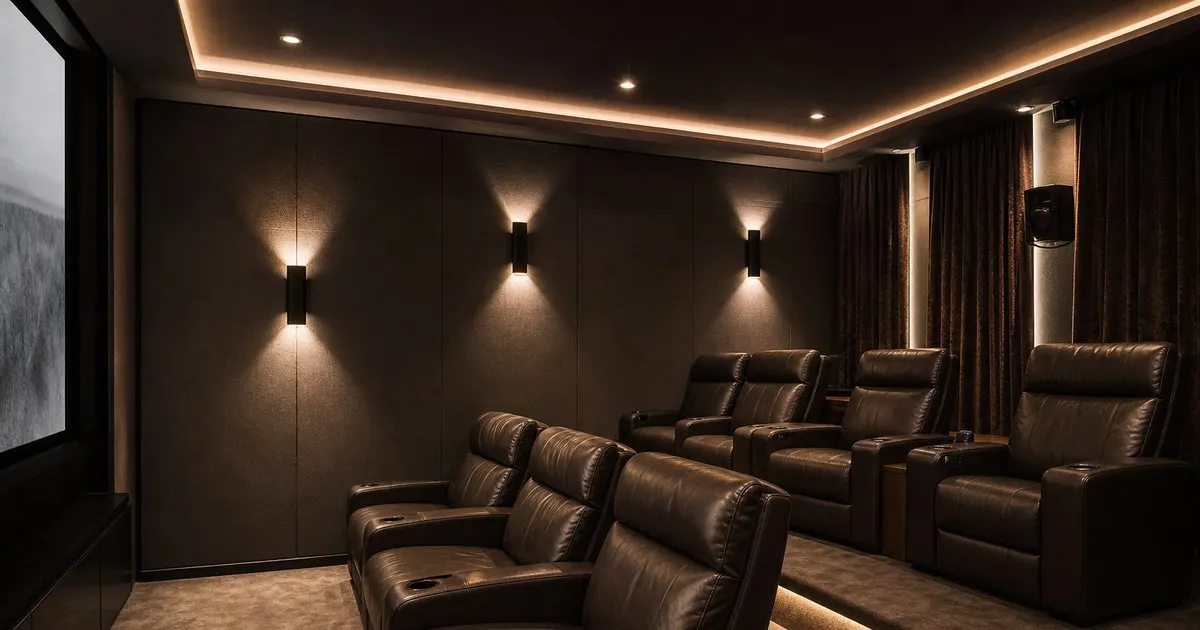
Deep, low-saturation colors do the job: charcoal, espresso, deep chocolate, midnight navy, bottle green, and oxblood all return little light. Pure black is the theoretical ideal and the practical disappointment; it shows every speck of dust and lint, feels heavy in a room of any size, and hides the stitching and grain that make a luxury chair worth looking at. Intensely saturated colors, a bright red or a vivid blue, can tint the reflected light and lend a faint cast to the screen's edges, so the more muted version of any color is the safer choice. Related: Are motorized headrests and powered lumbar worth the premium in luxury theater chairs?
The rules soften as you move away from the screen. The front row carries almost all of the reflection burden, so a rear row on a riser can wear a slightly lighter or warmer tone without harming the image. Many designers also keep the seating a shade lighter than the wall behind it, so the row has definition when the house lights are up while still reading as dark under screen light. If a cream or tan leather is the heart's desire, put it in the back row and choose a darker contrast headrest for the front. Related: Which reclining mechanisms deliver lasting comfort in premium theater seating arrangements at home?
Sheen and texture matter as much as hue
Two chairs in the same charcoal can behave very differently under a projector. A glossy, heavily pigmented topcoat throws back a hard highlight that reads almost like a mirror in a dark room, while an aniline or semi-aniline leather with a soft, waxy hand scatters the same light gently. Fabrics tend to be safer still: velvet, chenille, wool, and matte performance microfibers have a nap that breaks up reflections. Avoid anything with metallic threads, high-sheen synthetics, or a lacquered finish, and treat patent-style leathers as a hazard rather than a style choice. Related: What upholstery materials hold up best in a high-end private screening room over time?
Concentrate on the surfaces that face the screen. The top of the backrest and the headrest cushion present themselves almost square-on to the image, followed by the tops of the arms. Some makers will build a chair with a darker or more matte panel on the headrest and back while keeping the seat and arms in a lighter cover, which preserves the look you want at the door without costing contrast on screen. Contrast piping in a lighter thread along the arms is harmless; a lighter headrest panel is not.
Balancing reflection control with daytime beauty
A dedicated theater can be a dark cave and be all the better for it, but many rooms are shown to guests with the lights up and need to look considered. The usual answer is layering: dark seating closest to the screen, deep tones on the walls and ceiling around the screen, and warmer mid-tones toward the rear where reflection matters less, all lifted by warm, dimmable accent lighting. Nailhead trim and polished metal legs are fine on the sides of a chair where the screen cannot see them; they belong nowhere on a surface facing the image. Related: How do you choose luxury home cinema seating for a dedicated theater room?
Test before you commit. Order real samples in the exact finish, not just color chips, and hold each one at the front row position while the projector shows a dark scene. Watch the edges of the screen for a lift in the black floor as you swap samples, and look at the sample itself for hot spots. A few minutes of this in the actual room will tell you more than any showroom, and it is the kind of check a good dealer will be glad to help with.
- Dark, desaturated upholstery on the front row keeps screen light from bouncing back onto the image.
- Sheen matters as much as color: matte aniline leathers and napped fabrics reflect far less than glossy topcoats.
- Headrests and seat backs face the screen most directly, so darken those surfaces first if you want a lighter chair.
- Test a real sample in the room with a dark scene on screen before committing to a color.

Julien Jimenez
Julien Jimenez is an independent software builder based in Paris. He designs, ships, and operates focused SaaS products for small businesses and independent professionals. Read the full author page.
Seating Worthy of Every Screening
A design guide to luxury home cinema seating. Plushseatr is built to help you put this into practice.
Choose your seatingMore from the Plushseatr blog
How do you choose luxury home cinema seating for a dedicated theater room?

What upholstery materials hold up best in a high-end private screening room over time?

Which reclining mechanisms deliver lasting comfort in premium theater seating arrangements at home?
Get the complete luxury home cinema seating guide
Our full buying guide, the price guide, and new research as we publish it. One email, no spam, unsubscribe any time.