Which seating styles work better in a multipurpose media room than a dedicated theater?
A media room hosts game nights, guests, and daylight, not just films in the dark. The seating that wins there is not the seating that wins in a sealed theater.
How a media room differs from a theater room
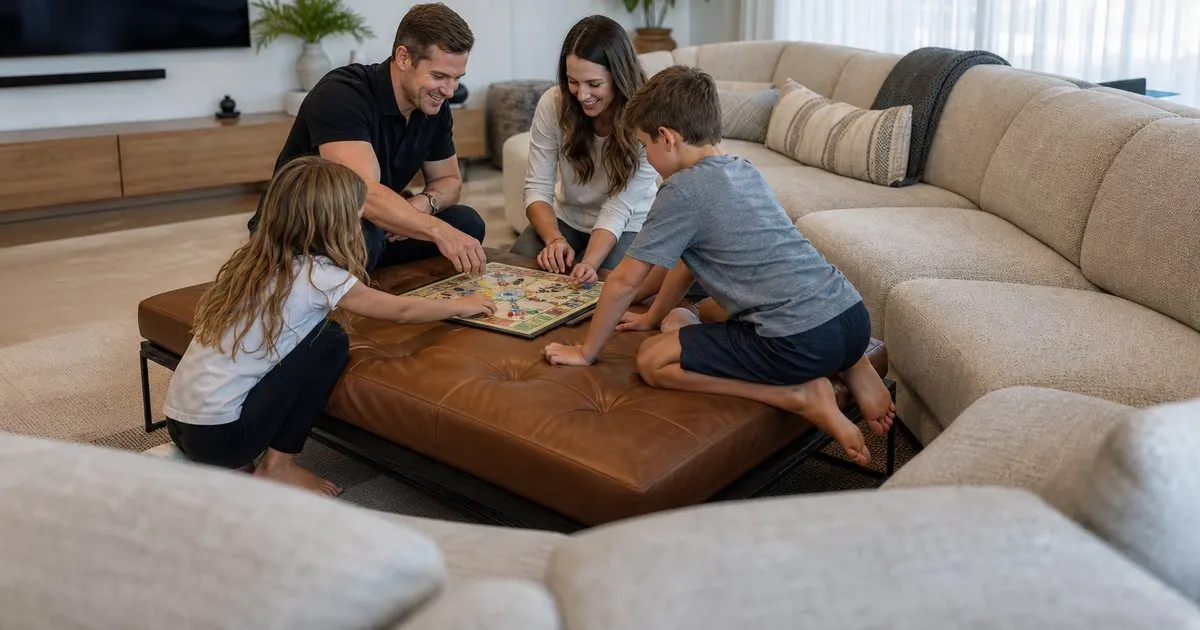
A dedicated theater is a sealed, darkened room where everyone faces the screen for two hours. A media room is something looser: it may open onto a kitchen or bar, it usually has windows, it hosts a game on Sunday afternoon with people standing and moving, and on a weeknight it is where someone reads while someone else plays a video game. The seating in a theater only has to do one thing well. Media room seating has to look right from the doorway, work when people face each other, survive sunlight and snacks, and still turn into a comfortable place to watch a film. Related: How do you choose luxury home cinema seating for a dedicated theater room?
That difference rules out the classic ganged row of cinema recliners more often than not. Rows read as a theater even when the room is being used as a lounge, the exposed mechanisms and unfinished backs look wrong from the kitchen, and fixed cup holders in every arm signal a purpose the room does not always serve. None of this makes theater seating bad; it simply means the design brief is different, and a buyer should judge candidates by how they behave in daylight with the screen off as much as in the dark with it on. Related: Which reclining mechanisms deliver lasting comfort in premium theater seating arrangements at home?
Keep reading: How do you choose luxury home cinema seating for a dedicated theater room?, What upholstery materials hold up best in a high-end private screening room over time?, Which reclining mechanisms deliver lasting comfort in premium theater seating arrangements at home?. See how Plushseatr helps you a design guide to luxury home cinema seating.
Sectionals, modular lounges, and the chaise question
The strongest answers are modular lounge collections, whether from the same makers who build theater rows or from high-end residential furniture houses that now offer concealed power recline. Look for fully upholstered backs and sides so the piece can float in the room, power recline in the seats that face the screen, and a mechanism that sits invisibly within the silhouette rather than beneath a gap. Deep lounge cushions are welcome, but check that the seat still offers support for an upright posture when the room is being used for conversation. Related: How many seats should a dedicated home theater room comfortably accommodate for guests?
Expect some compromises inside a sectional. Corner seats rarely recline because their footrest has nowhere to go, reclining seats usually face a fixed direction, and a chaise end is glorious for one person and awkward for two. Cup holders and charging ports can be tucked into a fold-down console between two seats or into an ottoman with a lift top, which keeps the surfaces clean when the room is not in film mode. A large, upholstered ottoman also gives the room a place for board games and feet, which no row of recliners can offer.
Fabric, color, and light in a room with windows
Daylight is the quiet enemy of luxury upholstery. Aniline leathers and many natural fabrics fade and dry out in direct sun, and a media room usually cannot be kept curtained all day. Protected or pigmented leathers with a finish that resists fading, and solution-dyed performance fabrics rated for high lightfastness, hold their color far longer under a window than the delicate covers that thrive in a dark theater. Ask the maker for the lightfastness rating of any cover you are considering and be honest about how much sun the room gets. Related: What upholstery materials hold up best in a high-end private screening room over time?
Color logic also shifts. In a dark theater the front row should be dark to keep screen light from bouncing back, but in a media room the ambient light already lifts the black level, so a mid-tone or patterned cover that hides crumbs, pet hair, and everyday wear is a sensible trade. Because the room is visible from the rest of the house, the cover should sit comfortably with the adjacent spaces rather than announcing a separate design world. Cleanability rises to the top of the priority list, especially with children and pets in the picture.
Mixing pieces: recliners in front, a lounge behind
Many of the best media rooms use a hybrid layout. Two or three individual power recliners sit closest to the screen for the people who want a true film experience, while a sectional, a pair of loveseats, or a counter with upholstered stools sits behind for the crowd that drifts in and out during a game. The rear seating can be lower and more casual, and a platform is rarely needed because the front recliners have low profiles and the rear guests are not committed to a full film. This arrangement also spends the budget where it counts, on fewer but better pieces up front.
Keep an eye on sightlines and on how the pieces relate. Sofa backs behind a row of recliners should stay low enough for the rear viewers to see over reclined heads, and seat heights across the two groups should be close enough that people can talk without one group looming over the other. Ordering the front recliners and the rear lounge in the same leather or a deliberately coordinated fabric keeps the room cohesive. This guide is independent and may earn a commission on some links, which does not change the recommendation to buy the room you will actually live in rather than the one that photographs like a theater.
- A media room needs seating that looks finished from every angle and works when people face each other, not only the screen.
- Modular sectionals with power recline in select seats and hidden mechanisms bridge lounge comfort and film-night support.
- Daylight demands lightfast covers such as pigmented leather or solution-dyed performance fabric.
- A hybrid layout, recliners in front and a lounge or counter behind, often serves a family better than a full row set.

Julien Jimenez
Julien Jimenez is an independent software builder based in Paris. He designs, ships, and operates focused SaaS products for small businesses and independent professionals. Read the full author page.
Seating Worthy of Every Screening
A design guide to luxury home cinema seating. Plushseatr is built to help you put this into practice.
Choose your seatingMore from the Plushseatr blog
How do you choose luxury home cinema seating for a dedicated theater room?
What upholstery materials hold up best in a high-end private screening room over time?
Which reclining mechanisms deliver lasting comfort in premium theater seating arrangements at home?
Get the complete luxury home cinema seating guide
Our full buying guide, the price guide, and new research as we publish it. One email, no spam, unsubscribe any time.